
ScopeSnap vs Skene
Side-by-side comparison to help you choose the right product.

ScopeSnap
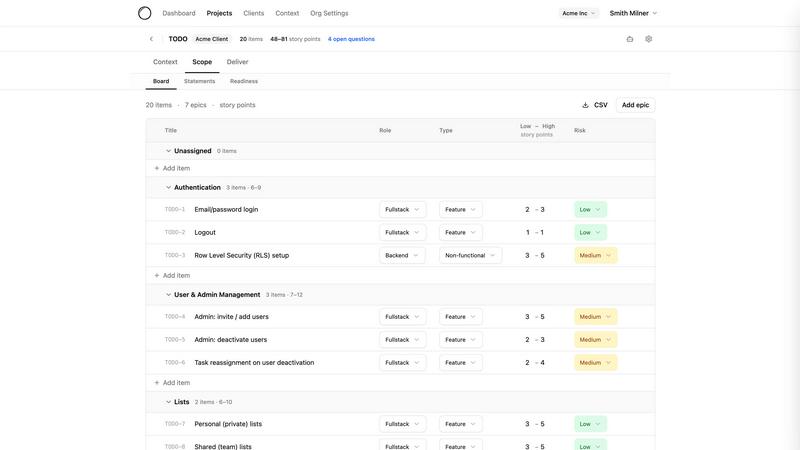
ScopeSnap turns your messy discovery notes into a clear, client-ready project proposal in minutes.
Last updated: March 18, 2026

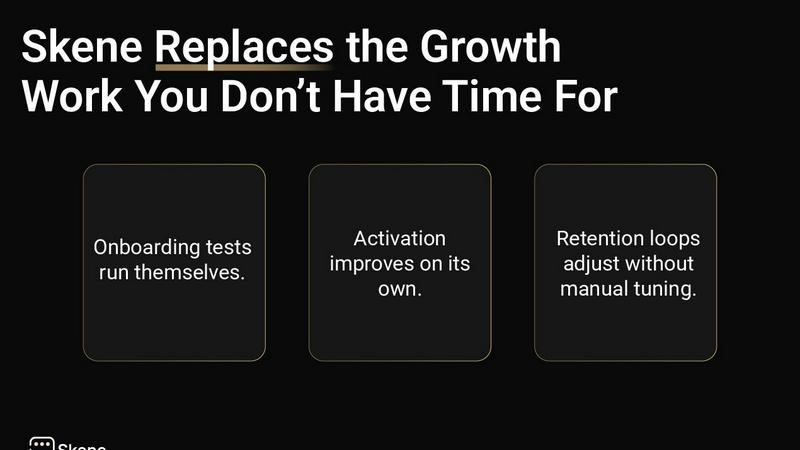
Skene transforms your codebase into a self-owned growth engine that drives product-led success through actionable.
Last updated: February 28, 2026
Visual Comparison
ScopeSnap
Skene
Feature Comparison
ScopeSnap
AI-Powered Scope Generation
Stop starting from a blank page. Simply paste in your discovery call transcripts, client emails, and scattered notes. ScopeSnap's AI analyzes this raw context to automatically generate a structured project backlog. It identifies key epics, breaks them down into actionable scope items, and intelligently flags assumptions and open questions that need clarification before you can estimate confidently. This feature turns hours of manual synthesis into minutes of productive review.
Interactive Scope Refinement & Estimation
The initial AI-generated scope is just the starting point for a collaborative refinement process. ScopeSnap provides a visual, board-like interface where you can easily drag, drop, edit, and categorize tasks. Assign roles, set time or complexity estimates, and directly address the open questions the AI surfaced. This iterative cycle allows you to pressure-test the scope with your team until every feature is well-understood and accurately estimated, transforming uncertainty into a solid plan.
Automated Proposal & SOW Creation
Once your scope board is finalized, ScopeSnap eliminates the final manual hurdle: document creation. With one click, transform your structured backlog, estimates, and assumptions into a professionally formatted Proposal or Statement of Work. The tool automatically compiles all the agreed-upon details into a client-ready document, saving you from the tedious copy-pasting and formatting that typically takes hours. You can then send it directly to your client, accelerating the closing process.
Centralized Project Discovery Hub
ScopeSnap acts as a single source of truth for your project's foundational phase. Instead of juggling notes across different apps, keep all discovery materials--call transcripts, email threads, meeting notes, and the evolving scope--in one organized workspace. This centralized approach ensures nothing gets lost in the shuffle, provides crucial context during scope refinement, and creates a clear audit trail of how the project's requirements were defined and agreed upon.
Skene
Automated Growth Optimization
Skene's core functionality lies in its ability to analyze your codebase for growth signals. It autonomously identifies friction points in user onboarding and activation, enabling you to create optimized user flows without manual input. This feature ensures that your product evolves with each deployment, keeping user engagement high.
Contextual AI Integration
With Skene, growth is tied directly to your development environment. It integrates seamlessly with your IDE, allowing you to implement growth strategies as part of your coding process. This contextual layer ensures that your AI can interact with your product, providing real-time insights and facilitating prompt-driven growth improvements.
Real-Time Analytics Dashboard
Skene offers a robust analytics dashboard that tracks user progress and engagement metrics in real time. You can monitor completion rates, identify bottlenecks, and measure the impact of your growth initiatives. This actionable data allows you to make informed decisions quickly, optimizing your user journey continually.
Outcome-Based Pricing Model
Skene's pricing is designed with your success in mind. You only pay when users successfully complete their onboarding journey, making it a low-risk investment for startups. The free tier allows for a limited number of onboardings each month, enabling you to test and validate Skene's capabilities before committing to a paid plan.
Use Cases
ScopeSnap
The Solo Freelancer Closing a New Client
A freelance developer has a great initial call with a potential client but is overwhelmed by the prospect of turning their complex idea into a formal proposal. Using ScopeSnap, they upload the call transcript and their notes. The AI generates a clear scope breakdown, highlighting areas that need more detail. The freelancer refines the estimates, resolves the open questions with a quick follow-up email, and generates a polished proposal within an hour, impressing the client with their speed and professionalism and winning the project.
The Small Agency Streamlining Client Onboarding
A small software agency finds their project managers spending days after discovery calls manually building scopes and SOWs from disparate notes. By adopting ScopeSnap, the entire team standardizes their process. After any discovery session, the lead shares the context into a shared ScopeSnap workspace. The team collaboratively refines the AI-generated backlog in real-time, ensuring all technical perspectives are considered. This leads to more accurate estimates and faster, consistent proposal generation for every new client.
The Consultant Scoping a Large, Multi-Phase Project
A technical consultant is engaged for a large enterprise project with vague initial requirements. They use ScopeSnap to systematically deconstruct the high-level goals from multiple stakeholder interviews. The tool helps them organize the work into clear phases and epics, surface major dependencies and assumptions for client sign-off, and build a detailed, phased statement of work. This structured approach builds immense client confidence and establishes a clear roadmap from day one.
Preventing Scope Creep on Fixed-Price Contracts
A developer who frequently works on fixed-price projects uses ScopeSnap to create an ironclad foundation. During discovery, they use the tool to document every requirement and assumption explicitly. The AI helps ensure nothing is missed. The resulting, highly detailed SOW generated by ScopeSnap becomes the official project contract. This clear, mutually agreed-upon document dramatically reduces ambiguity and serves as a definitive reference point to manage scope and client expectations throughout the project lifecycle.
Skene
Streamlined User Onboarding
For a startup looking to enhance user onboarding, Skene automates the process by identifying common friction points. By optimizing user flows, it ensures that new users can navigate your product effortlessly, leading to higher activation rates and reduced churn.
Enhanced Customer Retention
Skene's automated testing capabilities allow you to experiment with different retention strategies without the need for manual intervention. By continuously analyzing user behavior, it helps in crafting personalized experiences that keep customers engaged and coming back.
Data-Driven Feature Adoption
With Skene's real-time analytics, you can track how users interact with new features. This insight allows you to refine your product offerings based on actual user needs, leading to increased feature adoption and a more satisfied customer base.
Rapid Iteration and Improvement
For indie developers who thrive on continuous improvement, Skene facilitates rapid iteration cycles. It enables you to test different user flows and make adjustments on the fly, ensuring that your product evolves in line with user expectations and market demands.
Overview
About ScopeSnap
The journey from a promising client conversation to a signed project is often the most treacherous part of freelance development or agency work. You leave a discovery call with a head full of ideas and a page full of scribbled notes, only to face the daunting, solitary task of making sense of it all. The pressure to translate that raw potential into a clear scope, a confident estimate, and a professional proposal can stall projects before they even begin. ScopeSnap was built to transform this chaotic, error-prone process into a structured, confident workflow. It is the AI-powered co-pilot for developers, consultants, and software agencies who specialize in custom projects. At its core, ScopeSnap understands that a successful project starts with a crystal-clear foundation. It guides you from the messy middle of discovery directly to a client-ready deliverable. By intelligently processing your notes, transcripts, and emails, it helps you deconstruct a project vision into estimatable tasks, surface critical assumptions, and resolve open questions collaboratively. Once your scope is solid, it seamlessly generates the polished proposals and statements of work that win trust and secure projects. ScopeSnap isn't just a tool; it's a new path from ambiguity to agreement, designed to give you back hours of tedious work and the confidence to price and promise with precision.
About Skene
Skene is an innovative product-led growth (PLG) engine tailored for solo developers and early-stage startup founders who crave an autonomous growth mechanism for their products. Imagine dedicating hours, days, or even months to crafting a beautiful and functional application, only to face the uphill battle of user growth. The traditional growth strategies often require hiring specialized teams and managing a disjointed array of tools that distract from your core development work. Skene simplifies this process by transforming your codebase into a self-optimizing growth machine. By deeply understanding user interactions and identifying friction points, Skene automates the creation, testing, and deployment of improved user flows. This means you no longer need to rely on external growth widgets or cumbersome analytics dashboards. Instead, growth becomes an integral part of your infrastructure, allowing you to focus on what you love most—building and innovating your product.
Frequently Asked Questions
ScopeSnap FAQ
What kind of input does ScopeSnap need to generate a scope?
ScopeSnap is designed to work with the raw, unstructured information you already collect. You can paste in text from discovery call transcripts (from tools like Otter.ai or Rev), copy-paste relevant email threads, upload meeting notes, or simply type out your own summary. The AI analyzes this context to identify project goals, features, and requirements. The more detailed your input, the more comprehensive and accurate the initial scope generation will be.
How accurate are the AI-generated estimates?
ScopeSnap's AI is designed to assist with structuring and breaking down work, not to provide final estimates on its own. The primary value is in creating a complete, structured backlog of tasks that you, the expert, can then review and estimate based on your own experience and team velocity. The tool flags complex or ambiguous items for your attention, ensuring you don't overlook something difficult to estimate. The final estimates are always set by you.
Can I collaborate with my team or client in ScopeSnap?
Yes, ScopeSnap supports collaboration. You can invite team members to a workspace to jointly review and refine the AI-generated scope, assign tasks, and discuss open questions. For client collaboration, you can share specific views or use the tool to generate clear summaries and questions for them. The automated proposals and SOWs are designed to be the final, client-facing deliverable that encapsulates all the collaborative refinement done internally.
Is my client's data secure and private?
Data security and privacy are paramount. ScopeSnap employs industry-standard encryption for data both in transit and at rest. Client information and your proprietary project details are not used to train public AI models. We recommend reviewing the full Privacy Policy and Terms of Service on the ScopeSnap website for detailed information on data handling, retention, and your rights regarding the information you input into the platform.
Skene FAQ
What is PLG software?
PLG (Product-Led Growth) software automates the user journey, allowing users to discover value in your product without requiring manual intervention from sales or customer success teams. It focuses on driving user activation and retention through the product itself.
How is Skene different from traditional customer experience software?
Unlike traditional tools that rely on manual setup and maintenance, Skene automates the generation of onboarding and analytics flows directly from your codebase. This means that every time you push code, your growth strategies are automatically updated, reducing the need for constant oversight.
How long does it take to set up?
Setting up Skene is incredibly quick, taking less than 60 seconds. Simply connect your GitHub or GitLab repository with read-only access, and Skene will analyze your codebase to generate PLG flows without requiring any code changes or API modifications.
Is my code secure?
Yes, your code is secure with Skene. The platform only requires read-only access to your repository, and all analyses are conducted in a secure, isolated environment, ensuring that your intellectual property and sensitive information remain protected.
Alternatives
ScopeSnap Alternatives
ScopeSnap is an AI-powered productivity tool designed to streamline the often chaotic process of scoping and proposing custom software projects. It helps freelancers and agencies transform rough ideas into structured, estimatable plans and client-ready documents. This category of software is essential for professionals who need to translate client conversations into clear, actionable, and profitable agreements. Users might explore alternatives for various reasons, such as budget constraints, a need for different feature sets, or integration with their existing project management stack. Some may seek more granular control over proposal templates, while others prioritize collaborative editing or specific pricing models. The search for the right tool is a personal journey to find a solution that fits a unique workflow. When evaluating options, consider how a tool handles the core challenge: turning ambiguity into clarity. Look for solutions that reduce the risk of missed requirements, save significant time on administrative tasks, and ultimately build client trust through professionalism. The right fit will feel like a natural extension of your process, helping you scope with confidence rather than adding complexity.
Skene Alternatives
Skene is a powerful tool designed for solo developers and early-stage startups, transforming codebases into self-optimizing growth engines. As a product-led growth iteration engine, it automates the process of identifying user friction points and enhancing user flows, allowing creators to focus on building their products rather than managing separate growth tools. However, users often seek alternatives to Skene for various reasons, including pricing, feature sets, and specific platform requirements that may not be fully met. When looking for an alternative, it's essential to consider factors like integration capabilities, ease of use, and the ability to provide actionable insights based on your unique product architecture.