
Dreamflow vs Miget
Side-by-side comparison to help you choose the right product.

Dreamflow
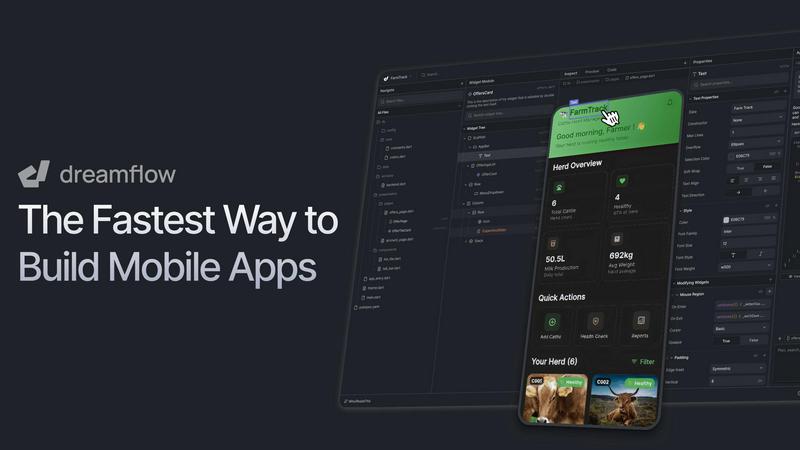
Dreamflow empowers you to effortlessly transform your ideas into production-ready mobile apps with AI-driven simplicity.
Last updated: March 1, 2026

Miget
Deploy unlimited services on one flat-rate plan.
Visual Comparison
Dreamflow
Miget
Overview
About Dreamflow
Dreamflow is an innovative visual AI builder designed to transform your app ideas into reality without the typical hurdles of software development. Imagine having a brilliant app concept, but facing the daunting task of coding or navigating the limitations of traditional no-code tools. Dreamflow eliminates these frustrations by offering a platform where visionary founders, agile entrepreneurs, and forward-thinking developers can thrive. With Dreamflow, you gain the speed of AI-assisted creation, the clarity of a visual editor, and the power of editable code – all in one place. Whether you articulate your idea in plain English, design its user interface on an intuitive canvas, or edit the Flutter code directly, every modification synchronizes seamlessly across all formats. This dynamic approach allows you to prototype rapidly, refine with precision, and ultimately produce a professional-grade application ready for deployment on the App Store, Google Play, or the web. Dreamflow is not merely a tool; it is your partner in the journey from concept to launch, ensuring you have the flexibility to innovate without compromising on speed or control.
About Miget
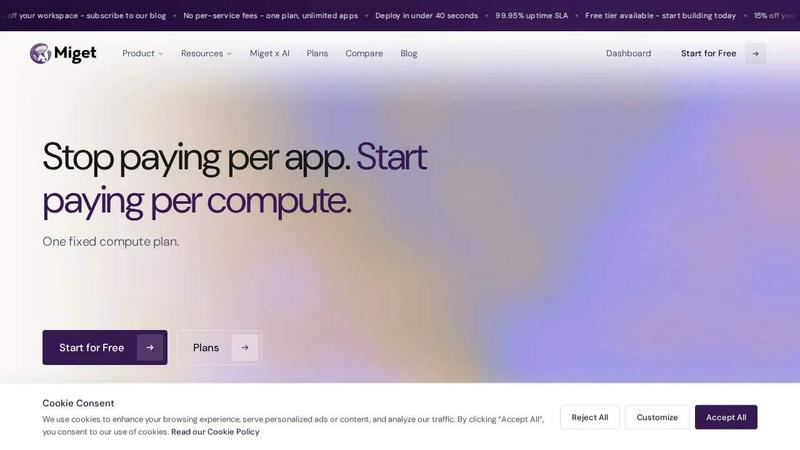
Miget – Stop paying per app. Start paying per compute.
Traditional PaaS platforms charge you for every app, database, and worker separately. Miget flips that model: pick a fixed compute plan, then deploy as many services as you want inside it.
- Unlimited apps, databases, and background workers per plan
- No per-service billing surprises
- Built on Kubernetes with full isolation between tenants
- Deploy from Git, GitHub, Registry with zero-config builds
- Managed PostgreSQL, Redis, and more
- Custom domains with automatic TLS
Whether you're running a single side project or a full production stack, you only pay for the compute you reserve—not the number of things you run on it.