
Deeploy vs Fusedash
Side-by-side comparison to help you choose the right product.

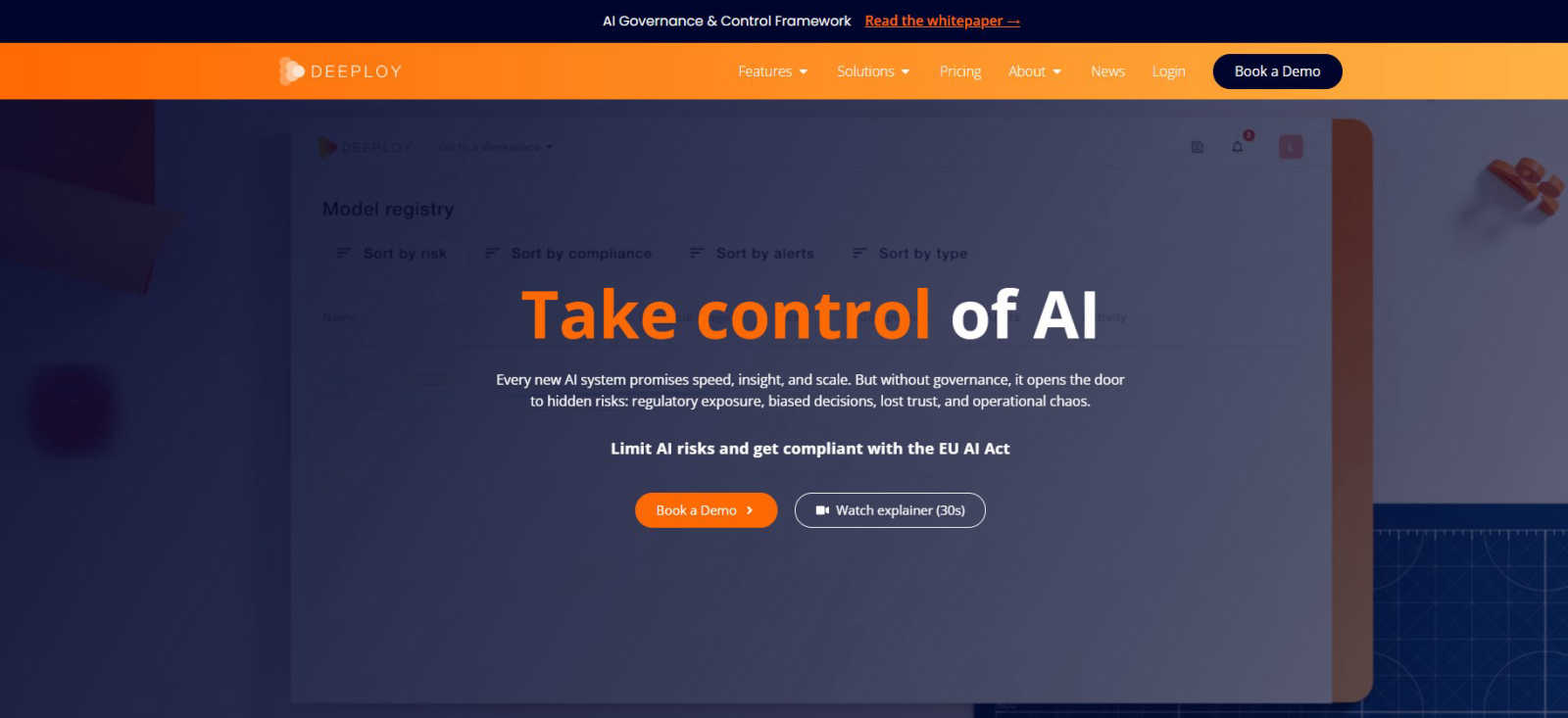
Deeploy transforms your scattered AI into a governed, scalable journey you control.
Last updated: March 1, 2026

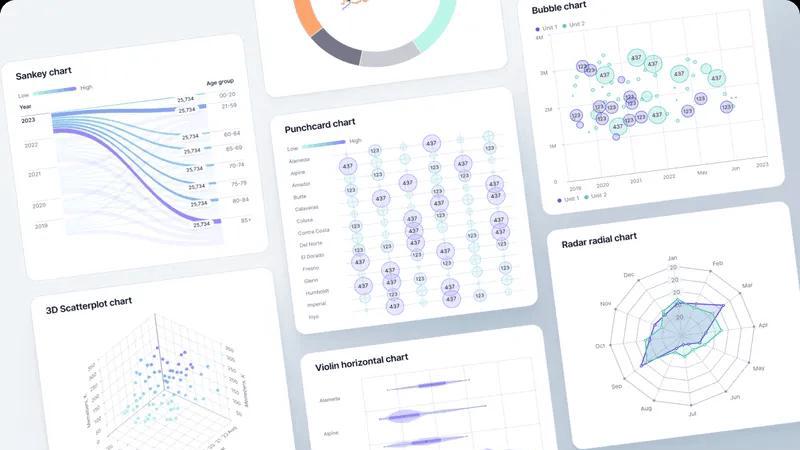
Fusedash transforms raw data into intuitive dashboards and charts, empowering your team to act on insights instantly.
Last updated: March 4, 2026
Visual Comparison
Deeploy
Fusedash
Feature Comparison
Deeploy
AI Discovery and Onboarding
Your journey to control begins with visibility. Deeploy provides a complete, centralized registry of every AI system across your organization. You can seamlessly discover and onboard models from any MLOps or GenAI platform, eliminating dangerous blind spots. This feature allows you to map your entire AI landscape without the pain of migrating systems, giving you a single source of truth for what AI is running, where, and who is responsible for it.
Control Frameworks
Navigating the complex web of AI regulations doesn't have to be a labyrinth. Deeploy offers guided workflows to simplify compliance. You can adopt default, pre-built frameworks based on standards like ISO 42001 and the NIST AI RMF, or create custom controls tailored to your organization's unique needs. This feature enables you to classify AI system risk in minutes, establish clear accountability with structured approval processes, and ensure every deployment meets your governance standards from the start.
Control Implementation
Governance only works if engineers can follow it. Deeploy turns high-level policies into clear, actionable requirements for development teams. It automates the heavy lifting by providing templates and auto-collecting evidence, accelerating compliance efforts by up to 90%. With AI-powered assessments handling repetitive checks, your technical teams spend less time on paperwork and more time building, while your governance team gains confidence that controls are being properly implemented.
Real-Time Monitoring
Prevention is the ultimate form of control. Deeploy's real-time monitoring acts as an early warning system for your AI in production. It instantly alerts you to model drift, performance degradation, or output anomalies before they impact users or create compliance breaches. For LLMs, you can add tracing and guardrails to protect outputs. This proactive oversight ensures you can maintain system integrity, uphold quality standards, and prevent costly AI incidents.
Fusedash
Flexible Views
Fusedash allows users to create tailored dashboard views that cater to the specific needs of different teams. With the ability to transform the same dataset into various formats—dashboards, charts, maps, or report-style views—it ensures stakeholders see only the most relevant information. This flexibility reduces the need for back-and-forth communication and empowers teams to focus on the insights that matter most.
AI Chart Generator
The AI Chart Generator feature enables users to swiftly create high-quality visuals from their data. Whether starting from a CSV or an API, users can generate charts in minutes, apply comparisons, and refine labels to ensure the visuals effectively communicate the intended story. This feature allows charts to be used as standalone visuals or integrated into larger dashboards, enhancing reporting efficiency.
Dashboard Software
Fusedash combines powerful dashboarding capabilities with narrative reporting, allowing teams to not only monitor KPIs but also understand the context behind performance changes. By integrating storytelling elements into dashboards, users can communicate what has changed, why it matters, and what the next steps should be, promoting alignment and reducing discrepancies in reporting.
AI Chat
Fusedash features an AI-powered chat interface that allows users to ask questions about their data in plain language. This smart chat functionality helps users explore breakdowns, get suggestions for relevant metrics and charts, and quickly generate insights that can be transformed into shareable dashboard views. This feature empowers users to engage with their data intuitively and efficiently.
Use Cases
Deeploy
Ensuring Regulatory Compliance (e.g., EU AI Act)
For organizations operating in or selling to regulated markets, Deeploy is the roadmap to compliance. It helps risk and legal teams systematically classify AI systems by risk level, implement the required controls for high-risk applications, and automatically generate the necessary documentation and audit trails. This turns the monumental task of adhering to the EU AI Act and other regulations into a managed, verifiable process.
Centralizing Oversight for Fragmented AI Estates
Many enterprises find their AI scattered across different business units, built on various platforms, with no unified view. Deeploy acts as the central command center, bringing all these disparate systems into one governance framework. This gives leadership complete visibility and control, turning a jungle of independent models into a coordinated, manageable portfolio that can be scaled with confidence.
Enabling Safe AI in Sensitive Industries
In sectors like healthcare, finance, or mental health services, AI errors carry significant consequences. Deeploy empowers these organizations by providing the explainability and human feedback loops critical for safe deployment. Clinicians or compliance officers can review AI decisions, understand the "why" behind a prediction, and provide corrective feedback, ensuring AI augments human expertise responsibly and transparently.
Accelerating Model Deployment with Governance Built-In
For AI and data science teams, lengthy compliance reviews can stall innovation. Deeploy integrates governance directly into the deployment pipeline. By providing engineers with clear requirements upfront and automating evidence collection, it reduces the compliance cycle from weeks to hours. This allows teams to iterate and ship models faster, knowing that all necessary controls and documentation are automatically handled.
Fusedash
Marketing Analytics
Marketing teams can leverage Fusedash to visualize campaign performance across various channels. By creating tailored dashboards, they can track key metrics such as engagement rates, conversion rates, and ROI, ensuring that stakeholders have a clear view of what strategies are working and what needs adjustment.
Sales Performance Monitoring
Sales teams can utilize Fusedash to monitor their performance in real-time. By integrating data from multiple sources, they can create dashboards that showcase sales trends, pipeline health, and regional performance, allowing for informed decision-making and timely interventions.
Operational Insights
Operations teams can benefit from Fusedash by visualizing operational metrics such as inventory levels, supply chain performance, and production efficiency. Custom dashboards provide insights that help identify bottlenecks and optimize processes, driving overall operational excellence.
Financial Reporting
Finance departments can streamline their reporting processes with Fusedash. By connecting various financial datasets, they can build comprehensive dashboards that display key financial metrics, trends, and forecasts, fostering transparency and enabling strategic financial planning.
Overview
About Deeploy
The journey from AI experimentation to enterprise-wide deployment is a treacherous one. What starts as a handful of promising models can quickly spiral into a chaotic jungle of unmonitored systems, hidden risks, and regulatory pitfalls. This is the critical gap that Deeploy was built to bridge. Deeploy is the essential governance infrastructure for scaling AI responsibly. It is a comprehensive AI Governance Software platform designed for organizations that have moved beyond pilot projects and are now facing the complex reality of managing AI at scale. For risk officers, compliance leaders, and AI executives, Deeploy transforms fragmentation into control. It provides a centralized command center to oversee, monitor, and ensure compliance for every AI system across your organization, whether built in-house, sourced from vendors, or embedded in applications. Its core mission is to empower you to scale AI faster, but never at the expense of control, trust, or safety. By offering flexible onboarding, real-time explainability, enforceable control frameworks, and immutable audit trails, Deeploy turns the daunting challenge of governance into a strategic advantage, ensuring your AI initiatives are transparent, compliant with regulations like the EU AI Act, and firmly aligned with your core business values.
About Fusedash
Fusedash is an innovative AI-powered data visualization platform that empowers teams to convert their connected data into meaningful, actionable insights. Designed for organizations tired of navigating through disjointed reporting tools, Fusedash serves as a cohesive workspace where users can create decision-ready dashboards, interactive charts, detailed maps, and narrative reports efficiently. Its core value proposition revolves around consistency and efficiency: teams define key metrics and KPIs once and reuse them across all visualizations and reports. This ensures that everyone—from executives to marketing and operations—is aligned with the same trusted data. Fusedash is perfect for teams seeking to streamline their reporting processes, eliminate conflicting data narratives, and foster a data-driven culture. By leveraging integrated AI features such as natural language data chat and smart visualization assistance, Fusedash enhances data exploration and makes reporting not only faster but also more accessible. Ultimately, it transforms raw data into a shared source of truth, driving alignment and informed decision-making across the organization.
Frequently Asked Questions
Deeploy FAQ
How does Deeploy handle AI systems from different vendors or platforms?
Deeploy is built for flexibility and operates as an overarching governance layer. It uses connectors and flexible onboarding processes to integrate with a wide range of MLOps platforms (like MLflow, Sagemaker), GenAI providers, and custom-built systems. You can discover and govern models regardless of where they are hosted, creating a centralized inventory without needing to migrate or rebuild your existing AI stack.
Can we customize Deeploy to fit our internal policies, not just external regulations?
Absolutely. While Deeploy provides excellent default frameworks for major standards like ISO 42001 and NIST, its power lies in customization. You can build, tailor, and implement your own unique control frameworks that reflect your company's specific ethics, risk appetite, and internal governance policies. Deeploy adapts to your journey, not the other way around.
What kind of "explainability" does Deeploy provide?
Deeploy provides real-time explainability features that help users understand how your AI models make decisions. This goes beyond simple accuracy metrics to offer insights into which factors influenced a specific prediction or output. This is crucial for debugging models, building trust with end-users, and meeting regulatory requirements for transparency, especially for high-risk or complex AI systems.
Is Deeploy only for large enterprises with massive AI deployments?
Not at all. While Deeploy is trusted by organizations running AI at scale, it is designed to be valuable at any stage of the AI maturity journey. Starting early with a proper governance foundation prevents chaos later. Smaller teams or those with fewer models can use Deeploy to establish best practices, maintain control as they grow, and ensure their initial deployments are compliant and well-documented from day one.
Fusedash FAQ
What types of data can I integrate with Fusedash?
Fusedash allows users to integrate data from various sources, including CSV uploads, API connections, and public datasets. This flexibility enables teams to create comprehensive views that combine multiple data streams for deeper insights.
How does Fusedash ensure data consistency across reports?
Fusedash allows users to define key metrics and KPIs once, which can then be reused across all dashboards and reports. This standardization ensures that all teams are working with the same definitions and numbers, promoting trust in the data.
Can I share my dashboards with stakeholders?
Yes, Fusedash provides options to share dashboards with stakeholders, ensuring that everyone has access to the same insights. This feature fosters alignment within teams and enhances collaborative decision-making.
How does the AI Chat feature work?
The AI Chat feature allows users to ask questions about their data in natural language. It provides suggestions for metrics, charts, and breakdowns, helping users navigate their data more effectively and quickly generate insights for reporting.
Alternatives
Deeploy Alternatives
Deeploy is a comprehensive AI Governance Software platform, a critical tool in the Business Intelligence category for organizations scaling artificial intelligence responsibly. It transforms the chaotic journey of AI deployment into a controlled, trustworthy environment by centralizing oversight, compliance, and monitoring. Users may explore alternatives for various reasons, such as budget constraints, specific feature requirements not covered by their current plan, or a need for a platform that integrates differently with their existing technology stack. The search for the right governance partner is a common step in finding the perfect fit for an organization's unique journey. When evaluating any alternative, focus on its ability to provide complete visibility into your AI landscape, offer robust frameworks for regulatory compliance, and translate policy into practical, automated controls. The right solution should feel less like a new obstacle and more like a trusted guide, empowering you to scale with confidence and maintain control at every stage.
Fusedash Alternatives
Fusedash is an AI-powered data visualization platform that simplifies the process of turning raw data into actionable insights through clear dashboards and interactive charts. As part of the Analytics & Data category, it is designed for teams seeking a unified workspace to streamline their reporting and decision-making processes. However, users often find themselves exploring alternatives due to various factors such as pricing concerns, specific feature requirements, or compatibility with existing platforms. When considering alternatives, it's essential to evaluate the ease of use, integration capabilities, and the ability to deliver consistent and accurate data that aligns with your organization's goals.