

Alternatives to act101
act101 gives your AI agent 163 grammars to refactor and port code across languages, keeping everything on your machine.
20 alternatives found
Egmatic
Ship 2D games without code. Visual node editor, drag-and-drop scenes, one-click publish to all platforms.

Sprite Sheet Maker
A free browser-based toolkit for creating, cutting, converting, and previewing sprite sheet animations.

layahost
Moderation, routing, intent and scoring for any text over one Jev-compatible API, hosted in the EU.

laya.tools
A free directory of 950+ projects built on Laya, the open-source decision model. Updated daily.
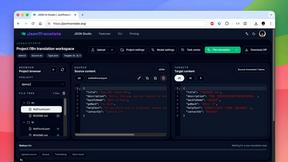
JsonTranslate
Translate JSON, Markdown, and TXT while preserving keys, nested paths, and project structure.

Forms Plugin
The #1 Native Form Builder Plugin for Framer - No Code, No Embeds, No External Platforms.

SdanceAI
Create short-form AI videos from text or images with the Seedance 2.5 online generator and API from SdanceAI.

AkraLabs
Where modern software products get discovered, launched, and distributed. Explore verified AI tools, SaaS startups, and developer software.

VidhyaGen
Fast, free, and privacy-first browser tool to convert, crop, resize, and compress images locally without server uploads.
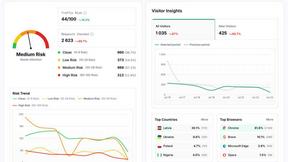

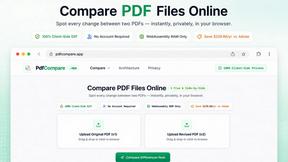

AppBanana
10,000+ Apps Approved, Yours Next With 10,000+ successful apps, we know exactly what Google wants, and how to get yours approved.


Firma.dev
Pay-as-you-go e-signature API and no-code sending. €0.049 per envelope, no monthly minimums, legally valid in 55+ countries.
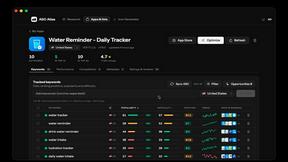
ASO Atlas
Real-time ASO tool with Apple Search Ads data for keyword research, rank tracking and opportunity scoring across 60+ storefronts.
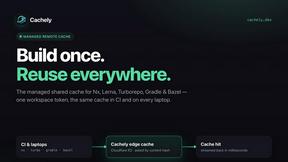
Cachely
Managed remote build cache for Nx, Lerna, Turbo, Gradle, and Bazel. Reuse artifacts across CI and developer machines.

AIQualityHQ
AIQualityHQ instantly checks your AI prompts for structure, safety, and privacy, helping you ship better results without any cost.
About act101 Alternatives
Picture this: you are an engineer deep in the flow, watching an AI agent rewrite a tangled Python function into clean, idiomatic Rust, or effortlessly porting a legacy Ruby script into Elixir. That is the promise of act101, a specialized dev tool that sits at the intersection of AI-assisted development and cross-language code transformation. It belongs to the broader category of developer tools, but it carves out a unique niche by offering 163 grammar definitions, 183 AST-level refactor operations, and 8 porting operations all exposed through a Model Context Protocol (MCP) server. While its capabilities are impressive, many users begin searching for alternatives when they encounter specific roadblocks: perhaps the free personal tier feels too limiting for a growing team, the supported AI agents like Claude Code and Cursor don't match their existing workflow, or they need deeper customization for proprietary language grammars that act101 does not yet cover. When evaluating alternatives, the key is to look beyond surface-level feature lists and consider the actual journey your code will take. You should prioritize tools that offer robust Abstract Syntax Tree (AST) manipulation, because that is what enables safe, semantic transformations rather than simple text replacement. Equally important is the breadth of language support—not just the number of grammars, but how well each grammar is maintained and how accurately it handles your specific dialects. Consider also the integration model: does the tool speak MCP, or does it require a different plugin or API? Finally, think about the learning curve and the narrative of your own development process. A tool that lets you start small, refactor a single file, and then scale up to entire codebases ported across languages will feel less like a utility and more like a trusted companion in your daily work.
FAQs about act101 Alternatives
What is act101?
act101 is a developer tool that enables AI agents to perform semantic code refactoring and porting across 163 programming languages. It provides 183 AST-based refactor operations, 30 codebase analyzers, and 8 porting operations, all exposed through a built-in MCP server. This allows agents like Claude Code, Cursor, Codex, and OpenCode to understand code at the grammar level, not just as text, enabling safe and accurate transformations such as porting C to Rust or Ruby to Elixir.
Who is act101 for?
act101 is designed for software engineers and development teams who work with AI coding agents and need to perform large-scale code refactoring or cross-language porting. It is particularly valuable for developers managing polyglot codebases, those migrating legacy systems between languages, and teams using tools like Claude Code, Cursor, Codex, or OpenCode who want to extend their agents' capabilities with deep grammar-level understanding. The tool serves both individual developers through its free personal tier and teams requiring more advanced features.
Is act101 free?
Yes, act101 is free for personal use. This free tier allows individual developers to access the core functionality, including the 163 grammars, 183 refactor operations, and 8 porting operations through the MCP server. For team or enterprise use cases with higher volume or additional requirements, users should check the official act101 documentation for pricing details on commercial or organizational licenses.
What are the main features of act101?
act101's main features include support for 163 programming language grammars, 183 AST-based refactor operations for safe code transformations, 30 codebase analyzers for understanding project structure, and 8 dedicated porting operations for cross-language migration. All these capabilities are exposed through a built-in MCP server, making them accessible to AI agents such as Claude Code, Cursor, Codex, and OpenCode. This enables agents to perform actions like refactoring Python code or porting C to Rust with semantic accuracy rather than simple text substitution.