
HookMesh vs Hostim.dev
Side-by-side comparison to help you choose the right product.

Transform your SaaS with HookMesh for hassle-free webhook delivery, automatic retries, and a self-service portal for.
Last updated: February 27, 2026

Hostim.dev
Hostim.dev streamlines app deployment with Docker and managed databases, offering secure EU hosting and transparent.
Last updated: March 1, 2026
Visual Comparison
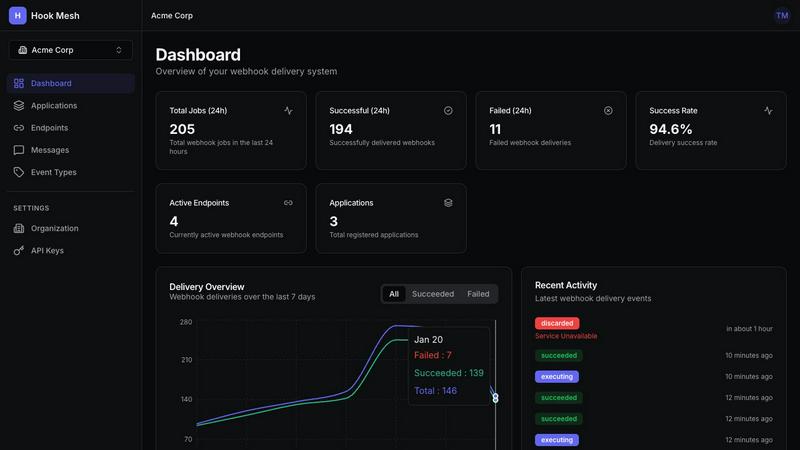
HookMesh
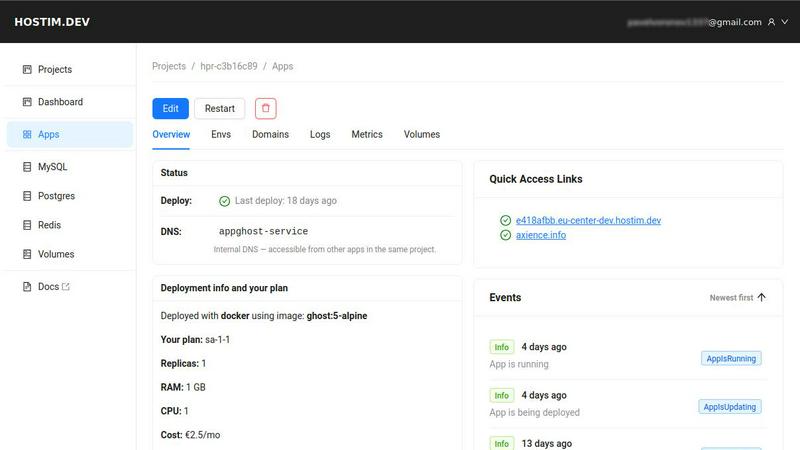
Hostim.dev
Feature Comparison
HookMesh
Reliable Delivery
At the core of HookMesh's offering is its reliable delivery mechanism, ensuring that no webhook is ever lost. It employs automatic retries in the event of failures, utilizing exponential backoff strategies to intelligently manage delivery attempts over a 48-hour period. With idempotency keys, HookMesh guarantees that duplicate messages are handled gracefully, allowing for seamless webhook management.
Customer Portal
The self-service customer portal is a game-changer for organizations using HookMesh. This embeddable UI allows customers to easily manage their webhook endpoints, view detailed delivery logs, and even replay failed deliveries with just one click. This level of transparency and control empowers users and enhances their overall experience.
Developer Experience
HookMesh places a strong emphasis on the developer experience. With a comprehensive REST API and official SDKs available for JavaScript, Python, and Go, developers can integrate webhook events into their applications with minimal effort. The simple installation process and straightforward function calls ensure that teams can ship webhooks in mere minutes, allowing them to focus on building their product.
Debugging Tools
Understanding the challenges that come with webhook debugging, HookMesh offers enhanced visibility into delivery logs and request/response data. This feature allows teams to monitor the status of their webhooks in real time, significantly reducing the time spent troubleshooting delivery issues. By simplifying the debugging process, HookMesh ensures that teams can maintain high service levels for their customers.
Hostim.dev
Simple Deployment with Docker and Git
Deploying applications has never been easier with Hostim.dev. Users can quickly launch their applications using Docker images, Git repositories, or Docker Compose files, significantly reducing time-to-market. This user-friendly approach eliminates the need for extensive DevOps knowledge, making it accessible for developers of all skill levels.
Built-in Managed Databases
Hostim.dev comes equipped with built-in databases, including MySQL, PostgreSQL, and Redis, which are provisioned instantly as part of the setup process. This feature allows developers to focus on application development rather than database management, thus enhancing productivity and efficiency.
Secure and Isolated Environments
Each project on Hostim.dev is isolated within its own Kubernetes namespace, providing enhanced security and organization. Additionally, automatic HTTPS ensures that all applications are secure by default, while live logs and metrics keep developers informed about their application's performance.
Transparent and Simple Pricing
Hostim.dev features a straightforward pricing model that starts as low as €2.50 per month. This transparent billing structure allows developers to easily track costs per project, making it easier to manage budgets and communicate expenses to clients without worrying about unexpected fees.
Use Cases
HookMesh
E-commerce Notifications
In the e-commerce sector, timely updates on order statuses are crucial for customer satisfaction. HookMesh enables online retailers to send real-time notifications about order confirmations, shipping updates, and delivery alerts, ensuring customers are always informed.
SaaS Integrations
For SaaS products that rely on third-party integrations, HookMesh simplifies the process of sending and receiving webhook events. By providing a reliable delivery mechanism, it facilitates seamless communication between services, enhancing the overall functionality of the software.
User Activity Tracking
Businesses looking to track user activity across their platforms can leverage HookMesh to send event-driven data. Whether it's user sign-ups, logins, or feature usage, the platform ensures that this data is delivered reliably to analytics tools, allowing for better insights and decision-making.
Payment Processing
In the payments industry, accurate and timely webhook delivery is essential. HookMesh allows payment processors to send transaction updates, refunds, and chargeback notifications swiftly and reliably, ensuring that all parties involved are kept in the loop.
Hostim.dev
Freelancers Deploying Client Projects
Freelancers can utilize Hostim.dev to deploy applications quickly and efficiently for their clients. With per-project billing and the ability to isolate each client’s application, freelancers can ensure clarity and control over costs, streamlining their workflow and enhancing client satisfaction.
Agencies Managing Multiple Clients
Agencies can leverage Hostim.dev to manage multiple client projects seamlessly. The platform's project isolation features allow agencies to maintain separate environments for each client, simplifying project management while providing a clear cost breakdown for every deployment.
Students Learning Real-World Skills
Students can take advantage of Hostim.dev to learn and experiment with real infrastructure. With a free trial and educational credits, students can deploy applications using Docker and databases, gaining hands-on experience that can be showcased in their portfolios.
Startups Launching MVPs
Startups can use Hostim.dev to quickly launch their Minimum Viable Products (MVPs) without the hassle of managing complex infrastructure. The platform’s rapid deployment capabilities and built-in managed databases allow startups to focus on refining their product and engaging with users rather than getting bogged down by backend complexities.
Overview
About HookMesh
HookMesh is a revolutionary solution tailored to streamline and enhance webhook delivery for today's modern SaaS products. In a world where businesses increasingly rely on real-time data, managing webhook delivery can often become a complex and time-consuming challenge. HookMesh alleviates these difficulties by providing developers and product teams with a robust platform that handles the intricacies of webhook management. By incorporating features like automatic retries, circuit breakers, and comprehensive debugging tools, HookMesh allows organizations to focus on their core products without being hindered by the technical burdens that come with building webhooks in-house. The result is a reliable infrastructure that ensures webhook events are delivered consistently and efficiently. With a self-service portal that empowers customers to manage their endpoints and replay failed webhooks with ease, HookMesh stands as the ultimate choice for businesses seeking reliability and peace of mind in their webhook strategy.
About Hostim.dev
Hostim.dev is a groundbreaking Platform-as-a-Service (PaaS) that transforms the way developers deploy and manage containerized applications. Designed with the modern developer in mind, Hostim.dev eliminates the complexities associated with traditional DevOps practices, allowing users to launch their applications swiftly and efficiently. By supporting Docker images, Git repositories, and comprehensive Docker Compose files, developers can have their applications up and running within minutes. The platform automatically provisions essential components such as MySQL, PostgreSQL, and Redis, letting developers concentrate on crafting innovative solutions rather than wrestling with infrastructure. Each project operates within its own Kubernetes namespace, ensuring robust security and organization. With transparent hourly billing and a GDPR-compliant hosting environment based in Germany, Hostim.dev serves as an ideal solution for freelancers, startups, agencies, and students seeking to streamline their deployment processes while maintaining full control over their infrastructure.
Frequently Asked Questions
HookMesh FAQ
What is HookMesh?
HookMesh is a webhook delivery solution designed to simplify the management of webhooks for SaaS products. It offers features like automatic retries, circuit breakers, and a customer portal for better endpoint management.
How does HookMesh ensure reliable delivery?
HookMesh employs a combination of automatic retries, exponential backoff, and idempotency keys to ensure that webhook events are delivered reliably and without duplication. This infrastructure is designed to handle delivery challenges effectively.
Can I replay failed webhooks?
Yes, HookMesh provides a user-friendly customer portal that allows users to replay failed webhook deliveries with just one click. This feature enhances visibility and control for customers managing their endpoints.
What programming languages are supported by HookMesh SDKs?
HookMesh offers official SDKs for JavaScript, Python, and Go, making it easy for developers to integrate webhook events into their applications with minimal effort. The SDKs simplify the process of sending events and managing delivery.
Hostim.dev FAQ
What does the free tier include?
The free tier offers a 5-day trial period where users can explore the platform's capabilities without the need for a credit card. During this trial, developers can deploy applications using Docker or Git, and access built-in databases to test their projects.
Can I deploy with just a Compose file?
Yes, Hostim.dev allows users to deploy their applications using just a Docker Compose file. This means developers can paste their Compose configuration and go live in minutes, making the process incredibly efficient and straightforward.
Where is my app hosted?
All applications deployed on Hostim.dev are hosted on bare-metal servers located in Germany. This ensures compliance with GDPR regulations and guarantees that data remains secure within the European Union.
Do I need to know Kubernetes?
No, users do not need to have extensive knowledge of Kubernetes to use Hostim.dev. The platform abstracts away the complexities of Kubernetes management, allowing developers to deploy and manage their applications without needing to understand the underlying orchestration.
Alternatives
HookMesh Alternatives
HookMesh is an advanced platform that specializes in simplifying webhook delivery for SaaS products, helping businesses overcome the technical hurdles associated with managing webhooks in-house. Users often seek alternatives to HookMesh for various reasons, including pricing structures that better suit their budgets, feature sets that align with specific project needs, or compatibility with their existing technology stack. When choosing an alternative, it's essential to consider factors such as reliability, ease of integration, scalability, and the level of customer support provided to ensure a seamless transition and optimal performance. --- [{"question": "What is HookMesh?", "answer": "HookMesh is a platform designed to enhance webhook delivery for SaaS products, providing reliable and efficient management of webhook events."}, {"question": "Who is HookMesh for?", "answer": "HookMesh is ideal for developers and product teams looking to streamline webhook management while ensuring consistent delivery of events."}, {"question": "Is HookMesh free?", "answer": "The pricing of HookMesh varies based on usage and features, and potential users should check the official site for detailed pricing information."}, {"question": "What are the main features of HookMesh?", "answer": "Key features of HookMesh include reliable delivery with automatic retries, a self-service customer portal, at-least-once delivery, and enhanced developer experience."}]
Hostim.dev Alternatives
Hostim.dev is a cutting-edge Platform-as-a-Service (PaaS) specifically tailored for developers seeking to simplify the deployment of containerized applications. By leveraging Docker, Git, or Docker Compose, Hostim.dev allows users to launch their applications with remarkable speed and ease, making it an attractive solution for developers, startups, and agencies alike. However, users often find themselves searching for alternatives due to various reasons such as pricing structures, specific feature sets that may be missing, or particular platform needs that aren't met. When considering alternatives, it's essential to evaluate the deployment process, the availability of built-in databases, the level of security offered, and how well the platform aligns with your project requirements and budget.