
diffray vs qtrl.ai
Side-by-side comparison to help you choose the right product.

diffray
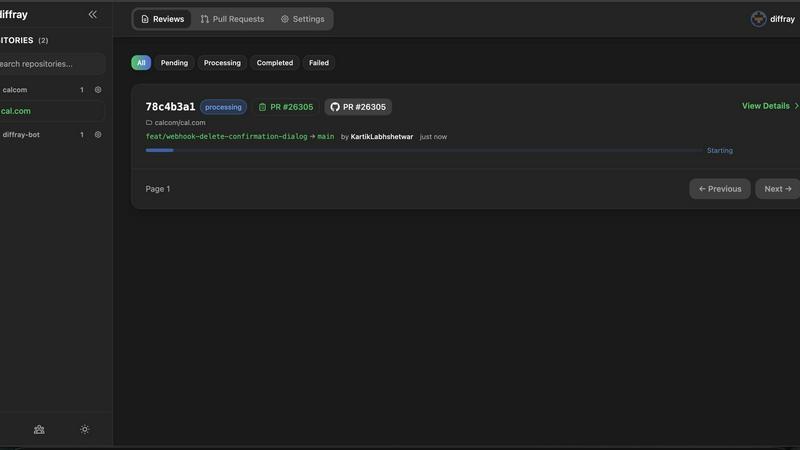
Diffray employs 30 AI agents to uncover real bugs in your code, ensuring robust and reliable software development.
Last updated: February 28, 2026

qtrl.ai
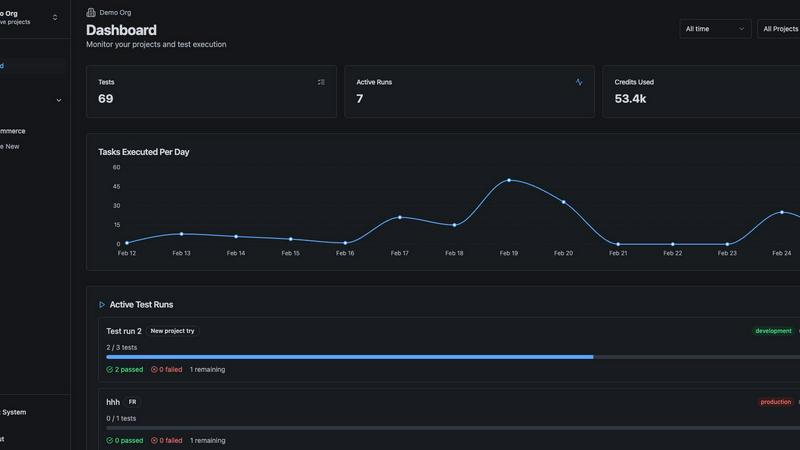
qtrl.ai empowers QA teams to scale testing with AI-driven agents while maintaining complete control and governance.
Last updated: March 4, 2026
Visual Comparison
diffray
qtrl.ai
Feature Comparison
diffray
Multi-Agent Architecture
Diffray stands out with its unique multi-agent architecture, deploying over 30 specialized AI agents. Each agent is tailored to focus on specific areas of code review, ensuring targeted and effective feedback rather than generic observations.
Expert Domain Analysis
With diffray, you gain access to AI agents that are experts in their fields—be it security, performance, or best practices. This specialization means that each review is thorough and context-aware, leading to more relevant insights that developers can truly act upon.
Reduced Review Time
Diffray's intelligent analysis drastically cuts down the time spent on pull request reviews. What typically took 45 minutes can now be accomplished in just 12 minutes per week, freeing up developers to focus on what they do best—creating and innovating.
Enhanced Issue Detection
The platform's advanced capabilities allow teams to catch three times more real issues than traditional code review methods. With 87% fewer false positives, developers can trust the feedback they receive, making the review process more efficient and effective.
qtrl.ai
Autonomous QA Agents
qtrl.ai features autonomous QA agents that can execute instructions on demand or run continuously, adapting to your team’s needs. These agents operate within your defined rules and provide real browser execution, ensuring reliable testing across different environments and scenarios.
Enterprise-Grade Test Management
With qtrl.ai's enterprise-grade test management, teams can maintain centralized test cases, plans, and runs. This feature ensures full traceability and audit trails, allowing for both manual and automated workflows that are built for compliance and auditability, making it easier to adhere to industry standards.
Progressive Automation
The platform offers a progressive automation feature where teams can start with human-written test instructions before gradually transitioning to AI-generated tests. qtrl.ai suggests new tests based on coverage gaps, allowing for a seamless review and approval process that keeps teams in control of their testing strategy.
Adaptive Memory
qtrl.ai includes an adaptive memory feature that builds a living knowledge base of your application. By learning from exploration, test execution, and identified issues, this feature powers smarter, context-aware test generation that becomes increasingly effective with every interaction, fostering continuous improvement.
Use Cases
diffray
Streamlined Code Reviews
In a fast-paced development environment, diffray enables teams to streamline their code reviews. By providing precise feedback, developers can quickly address issues, leading to a more efficient workflow and faster deployment cycles.
Security Audits
Security is paramount in software development. With diffray's dedicated agents focused on identifying vulnerabilities, teams can conduct thorough security audits, ensuring that their code is robust and secure against potential threats.
Performance Optimization
For teams looking to enhance the performance of their applications, diffray provides insights that help identify bottlenecks and inefficiencies. Agents specialized in performance analysis ensure that the code is not only functional but also optimized for speed and efficiency.
Continuous Integration Environments
In continuous integration (CI) environments, diffray acts as a safety net. As code is frequently pushed to repositories, the platform ensures that every commit is rigorously reviewed, catching issues early and maintaining high code quality standards.
qtrl.ai
Product-Led Engineering Teams
For product-led engineering teams, qtrl.ai provides a robust solution for managing complex testing scenarios while ensuring that quality remains a top priority. The platform allows teams to collaborate effectively, enabling faster release cycles without sacrificing oversight.
QA Teams Moving Beyond Manual Testing
QA teams that are transitioning from manual testing to automation find immense value in qtrl.ai. The platform’s gradual approach to automation allows teams to maintain control while incrementally adopting AI-driven testing methodologies, resulting in improved efficiency and coverage.
Companies Modernizing Legacy Workflows
Organizations looking to modernize their legacy QA processes can leverage qtrl.ai to streamline their testing efforts. The platform’s integration capabilities ensure compatibility with existing tools, facilitating a smoother transition to modern workflows that enhance quality and responsiveness.
Enterprises Requiring Governance
Enterprises that must adhere to strict compliance and auditing requirements can rely on qtrl.ai for its enterprise-grade features. With full traceability, audit trails, and permissioned autonomy levels, qtrl.ai provides the necessary governance and transparency that larger organizations demand.
Overview
About diffray
Imagine a world where code reviews are no longer a frustrating experience filled with generic feedback and irrelevant suggestions. Welcome to diffray, a revolutionary multi-agent AI code review platform designed to redefine how engineering teams ship quality code. Born from the frustration of developers dealing with single-model AI reviews, diffray operates on the belief that code review should be a focused investigation rather than a chore of sorting through false alarms. By deploying a team of over 30 specialized AI agents, diffray ensures that each aspect of your code is meticulously examined by experts in their respective fields. Whether it's security vulnerabilities, performance optimization, bug detection, or adhering to best practices, diffray's agents work in harmony to provide actionable and precise feedback. This transformative approach allows development teams to significantly reduce their pull request review time from an average of 45 minutes to just 12 minutes per week, all while catching three times more genuine issues and achieving an impressive 87% reduction in false positives. For developers tired of the noise created by generic AI tools, diffray offers a solution that feels like having an experienced senior engineer by your side for every commit.
About qtrl.ai
qtrl.ai is a revolutionary quality assurance platform designed specifically for modern software development teams aiming to enhance their QA processes without compromising on governance or control. By merging enterprise-grade test management with sophisticated AI-driven automation, qtrl.ai serves as a centralized hub for organizing test cases, planning test runs, and tracking quality metrics in real-time. With a focus on providing clear visibility into testing outcomes, qtrl.ai empowers engineering leads and QA managers to identify potential risks and ensure comprehensive coverage of requirements.
What sets qtrl.ai apart is its innovative approach to AI integration. Instead of implementing a one-size-fits-all, autonomous AI model, qtrl.ai offers a progressive pathway that allows teams to gradually adopt intelligent automation. Starting with manual test management, teams can transition to using autonomous agents that generate UI tests from simple English descriptions and adapt as applications evolve. This makes qtrl.ai particularly suitable for product-led engineering teams, QA groups transitioning from manual processes, organizations modernizing outdated workflows, and enterprises that require stringent compliance and audit trails. Ultimately, qtrl.ai bridges the gap between the slow pace of manual testing and the complexities of traditional automation, enabling faster, more intelligent quality assurance.
Frequently Asked Questions
diffray FAQ
How does diffray reduce false positives?
Diffray employs a multi-agent approach, allowing each AI agent to specialize in specific areas of code review. This targeted analysis minimizes irrelevant feedback and focuses on genuine issues, resulting in an 87% reduction in false positives.
Can diffray integrate with existing workflows?
Yes, diffray is designed to integrate seamlessly with popular version control systems and CI/CD pipelines. This ensures that teams can incorporate diffray into their existing workflows without disruption.
What types of issues can diffray detect?
Diffray's specialized agents are capable of detecting a wide range of issues, including security vulnerabilities, performance bottlenecks, coding bugs, and adherence to best practices. This comprehensive analysis ensures that all aspects of the code are rigorously evaluated.
Is diffray suitable for small teams?
Absolutely! Diffray is beneficial for teams of all sizes. Whether you are a small startup or a large enterprise, the platform scales to meet your needs, providing valuable insights that enhance code quality and review efficiency.
qtrl.ai FAQ
How does qtrl.ai ensure the security of my testing processes?
qtrl.ai is built with enterprise-ready security measures, ensuring that sensitive information is protected. The platform operates with permissioned autonomy levels and provides full agent visibility, eliminating black-box decision-making.
Can I start with manual testing and transition to automation later?
Yes, qtrl.ai is designed for progression. You can begin with manual test management and gradually introduce AI automation as your team becomes comfortable with the platform, making it adaptable to your pace.
What types of environments can I run tests on with qtrl.ai?
qtrl.ai supports multi-environment executions, allowing teams to run tests across development, testing, staging, and production environments. Each environment can have its own variables and encrypted secrets for added security.
How does qtrl.ai help in identifying coverage gaps?
qtrl.ai analyzes your existing test coverage and suggests new tests to fill any identified gaps. This proactive approach enables your team to maintain comprehensive coverage and ensure that all critical areas of your application are tested thoroughly.
Alternatives
diffray Alternatives
Diffray is a revolutionary multi-agent AI code review platform designed to enhance the coding experience for developers. By employing over 30 specialized AI agents, diffray focuses on providing precise and actionable feedback rather than generic suggestions. This targeted approach transforms the often tedious process of code review into a more efficient and insightful collaboration, allowing engineering teams to ship quality code faster. Users commonly seek alternatives to diffray for various reasons, including pricing structures, feature sets, and compatibility with different platforms. Developers often look for tools that align better with their specific needs, whether that involves enhanced security features, improved performance analysis, or integration with existing workflows. When selecting an alternative, it's crucial to evaluate the tool's ability to offer specialized insights, the depth of its contextual analysis, and the overall impact on reducing false positives while improving code quality.
qtrl.ai Alternatives
qtrl.ai is a cutting-edge QA platform that empowers software teams to enhance their quality assurance processes through a mix of AI-driven automation and robust test management capabilities. It is designed to help teams scale their testing efforts while maintaining stringent control and governance, providing a structured environment for managing test cases, tracking quality metrics, and ensuring comprehensive coverage of requirements. Users often seek alternatives to qtrl.ai for various reasons, including pricing considerations, specific feature requirements, or compatibility with existing platforms. When exploring alternatives, it’s essential to look for solutions that not only offer similar functionalities but also provide a user-friendly experience, reliable support, and the ability to integrate seamlessly into your current workflows. A clear understanding of your team’s needs and priorities will guide you in selecting the right tool.